




What is PPE Category III? Cleanroom PPE and EU Annex 1
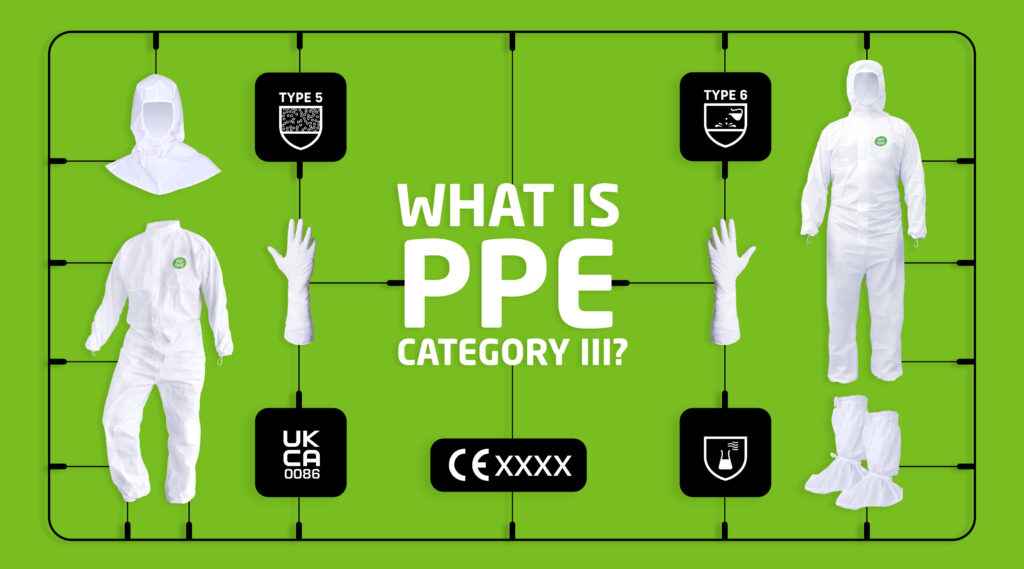
What Is PPE Category III - And Why Does It Matter in Cleanroom Environments?
PPE Category III is often treated as a catalogue claim. In pharmaceutical cleanrooms it should be treated as a component of technical evidence.
Under Regulation (EU) 2016/425, personal protective equipment is classified according to the risk against which it is intended to protect the wearer. Category III applies to risks that may cause very serious consequences, including death or irreversible damage to health. For Category III PPE, the manufacturer must follow a higher conformity assessment route than for lower-risk PPE. This normally includes EU type-examination by a Notified Body and ongoing conformity assessment through supervised product checks or production quality assurance.
EU GMP Annex 1 approaches the problem from a different direction. Annex 1 is not a PPE certification regulation. Its primary concern is contamination control in the manufacture of sterile medicinal products. It expects clothing and gowning systems to be appropriate for the process and grade, to protect the product from contamination, and, where operator protection is also needed, to do so without compromising product protection.
The important point for QA, RA and aseptic engineering teams is therefore not that Annex 1 literally says “use PPE Category III”. It does not. The correct technical linkage is that PPE Category III provides an independently verified conformity layer for high-risk PPE used within an Annex 1 contamination control system. In a CCS, Category III evidence can support the rationale that the selected PPE is controlled, traceable and subject to an appropriate level of independent oversight.
1. Where PPE Category III regulatory classification & cleanroom intersect
A cleanroom grade or ISO class describes the environmental cleanliness of an area or zone. In EU GMP Annex 1, Grade A, B, C and D describe cleanroom conditions for sterile manufacture. In ISO 14644 terminology, particle concentrations define ISO classes.
PPE Category I, II and III are classifications under the PPE regulatory framework. They describe the level of risk against which the PPE is intended to protect the person wearing it and the conformity assessment route required before the PPE is placed on the market.
A glove, garment, mask or goggle may be suitable for a cleanroom because it is low-linting, sterile, clean packaged and compatible with Grade A/B gowning. It may also be Category III because it protects the operator from chemical or biological hazards. These two dimensions are related in pharmaceutical use, but they are not the same thing.
For QA teams, the correct question is therefore two-part:
Does this PPE protect the product and environment from operator-derived contamination?
Does this PPE protect the operator from the product, process, disinfectant or biological hazard without compromising product protection?
Annex 1 addresses the first question explicitly. PPE Category III helps answer the second question and provides independent evidence that can strengthen the overall justification.
2. The three PPE categories under Regulation (EU) 2016/425
Regulation (EU) 2016/425 classifies PPE by risk category. The category determines the conformity assessment procedure and the level of Notified Body involvement.
| PPE category | Regulatory risk concept | Typical conformity route | Relevance to pharmaceutical cleanrooms |
|---|---|---|---|
| Category I | Minimal risks only | Internal production control by the manufacturer | Not an appropriate evidence basis for high-risk cleanroom PPE where biological, chemical or aseptic process risks are present. |
| Category II | Risks other than Category I or Category III | EU type-examination by a Notified Body, followed by conformity to type based on internal production control | May apply to some intermediate-risk products, but does not provide the production surveillance expected for Category III PPE. |
| Category III | Risks that may cause very serious consequences such as death or irreversible damage to health | EU type-examination plus either supervised product checks at random intervals or production quality assurance | Relevant where PPE protects against hazardous substances, harmful biological agents or other high-consequence risks encountered in pharmaceutical manufacturing. |
Category III is not a performance standard. It is a risk category and conformity assessment pathway. The performance standard is supplied by the harmonised or recognised standard applied to the specific PPE type, such as EN ISO 374 for chemical and biological protective gloves or EN ISO 13982-1 / EN 13034 for Type 5/6 protective garments.
3. What makes Category III different from a quality perspective?
Category III differs from lower categories in the degree of independent oversight.
For Category I PPE, the manufacturer can generally self-certify. For Category II PPE, a Notified Body performs EU type-examination, but ongoing production surveillance is not at the same level as Category III. For Category III PPE, the conformity assessment route requires EU type-examination and either Module C2 supervised product checks at random intervals or Module D production quality assurance.
This is why Category III is important for pharmaceutical buyers. It does not simply say that a product was tested once. It indicates that the design has been independently assessed and that continuing production conformity is part of the certification model.
For audit purposes, this changes the evidence question from:
“Does the supplier claim the PPE is suitable?”
To:
“Can the supplier show the applicable Declaration of Conformity, Notified Body certificate, standard scope, product code coverage and ongoing production assurance route?”
That second question is much closer to how QA and RA teams need to think when writing supplier qualification files and CCS justifications. Tools such as our Certificate Finder are designed to make that level of verification practical at lot level.
4. The CE mark and the four-digit Notified Body number
For Category III PPE, the CE marking is followed by the identification number of the Notified Body involved in the production control procedure. In practical terms, this four-digit number is one of the fastest ways to identify whether the product is being presented as Category III PPE.
A QA reviewer should not stop at the CE mark. The review should include:
the EU Declaration of Conformity; the PPE category; the Notified Body name and four-digit number; the applicable standard or standards; the certificate number; the product model, code and size range covered by the certificate; the conformity route, typically Module B plus Module C2 or Module D; the validity period or surveillance status, where applicable.
The Notified Body number can be cross-checked using the European Commission NANDO database. This is a useful supplier qualification step because a certificate is only meaningful if it covers the product being purchased and the body issuing or supervising it is notified for the relevant scope.
5. Why Category III becomes strategically important in cleanroom PPE
In a pharmaceutical cleanroom, PPE can perform three overlapping functions.
First, it can protect the product from the operator. Personnel generate particles, fibres, droplets and microorganisms. Annex 1 reflects this by requiring gowning and clothing to be appropriate for the process and grade, and by specifying sterile gowning components for Grade B areas where there is access or intervention into Grade A.
Second, PPE can protect the operator from the process. Pharmaceutical operators may handle cytotoxic drugs, potent APIs, biological agents, disinfectants, cleaning agents, solvents or contaminated surfaces. These are wearer-protection risks, which is exactly the risk logic addressed by the PPE Regulation.
Third, PPE can protect the process from the secondary effects of operator protection. This is often overlooked. A garment may be chemically protective but shed fibres. A glove may resist permeation but be difficult to double-don. Goggles may protect the eyes but create fogging or poor fit that drives aseptic behaviour failures. Annex 1 explicitly warns that when clothing is used to protect the operator from the product, it should not compromise protection of the product from contamination.
This is the technical bridge between Category III and Annex 1. Category III does not replace GMP qualification; it strengthens the wearer-protection evidence inside a broader contamination control assessment. Our Validation Packs are structured to bring both layers of evidence together for QA review.
6. Category III and Annex 1: the correct relationship
Annex 1 and the PPE Regulation ask different questions.
| Framework | Primary question | Evidence type |
|---|---|---|
| PPE Regulation (EU) 2016/425 | Does the PPE protect the wearer against the risk it claims to protect against, and has it followed the correct conformity assessment route? | Declaration of Conformity, Notified Body certificate, harmonised standards, CE marking and Notified Body number. |
| EU GMP Annex 1 | Does the clothing and gowning system reduce contamination risk and remain appropriate for the process, grade and contamination control strategy? | CCS rationale, gowning qualification, sterility validation, Endotoxin reporting, particle and fibre shedding data, packaging controls, training, monitoring and change control. |
The correct conclusion is not “Category III equals Annex 1 compliance”. A Category III product can still be unsuitable for a Grade A/B cleanroom if it sheds particles, lacks validated sterility, is poorly folded, has inadequate packaging integrity, or is incompatible with aseptic gowning.
The correct conclusion is:
Category III is a necessary evidence layer where high-consequence wearer-protection risks are present, but it must be integrated with Annex 1-specific evidence for contamination control.
7. Annex 1 statements that make PPE evidence important
Annex 1 is highly relevant to PPE selection because it describes clothing and gowning as contamination controls.
The following Annex 1 concepts should be translated into PPE evidence during supplier qualification:
Clothing and its quality should be appropriate for the process and the grade of the working area. Clothing should be worn so that it protects the product from contamination. Where clothing is used to protect the operator from the product, it should not compromise product protection. Clothing should be chosen to limit shedding caused by operator movement. For Grade B areas, including access or interventions into Grade A, sterile headgear, sterile facemask, sterile eye coverings, sterilised footwear and sterile gloves are expected as part of the gowning system. The protective clothing should minimise shedding of fibres or particles and retain particles shed by the body. Particle shedding and particle retention efficiencies should be assessed during garment qualification. Garments should be packed and folded to permit gowning without contacting the outer surface or allowing the garment to touch the floor. Additional gowning, including gloves and facemasks, may be required in Grade C and D areas when activities are considered a contamination risk as defined by the CCS.
These points are why a cleanroom PPE file should contain more than a product data sheet. It should contain a technical justification.
8. Standards by PPE type: how to read the evidence
Gloves
For pharmaceutical cleanroom gloves, the standards file usually combines PPE, medical glove, cleanroom and sterility evidence.
Relevant standards and evidence may include:
EN ISO 374-1 for protective gloves against dangerous chemicals and microorganisms; EN ISO 374-5 for protective gloves against microorganisms; EN 374-2 for penetration resistance, where applicable; EN 455 series for medical glove physical properties, freedom from holes, biological evaluation and shelf life; EN ISO 11137 or EN ISO 11135 for validated sterilisation, depending on sterilisation modality; endotoxin testing where the glove is used in critical sterile manufacture; particle cleanliness data; chemical permeation data, including chemotherapy permeation data where relevant.
For sterile Grade A/B use, PPE Category III should be read alongside sterility assurance level, endotoxin control, cleanroom processing, packaging, double-donning compatibility and lot-level documentation.
Isofield examples for internal linking: Volta, Eclipse, Blazer, Stellar and CR++ cleanroom gloves.
Garments, hoods, sleeves and overboots
Cleanroom garments are often presented as Category III Type 5/6. The Type classification is not the same as the PPE category. Type 5 refers to protection against airborne solid particles, and Type 6 refers to limited protection against liquid chemical splashes. These claims are commonly associated with EN ISO 13982-1 and EN 13034 respectively.
Relevant standards and evidence may include:
EN ISO 13982-1 for Type 5 particle protection; EN 13034 for Type 6 limited liquid splash protection; EN ISO 13688 for general protective clothing requirements; EN 14325 for test methods and performance classification, where applicable; Helmke Drum testing or equivalent particle shedding data; sterility validation for sterile garment systems; packaging integrity and aseptic folding evidence; anti-static evidence where relevant; chemical or cytotoxic permeation evidence where relevant.
For Annex 1, the critical technical issue is not simply whether a garment is Type 5/6. It is whether the garment system minimises shedding, retains body-shed particles, can be donned without contaminating the outer surface, and remains controlled through its lifecycle.
Isofield examples for internal linking: Vista and Horizon cleanroom garment ranges.
Facemasks
Cleanroom facemasks require careful terminology. A facemask may be assessed under EN 14683 as a medical face mask, while respiratory protective equipment may be assessed under EN 149. These are different product concepts.
For Annex 1 Grade A/B gowning, the facemask function is contamination control: it helps cover facial skin and reduce shedding of droplets and particles. Therefore, the relevant evidence normally includes:
bacterial filtration efficiency; particle filtration efficiency; differential pressure or breathability; microbial cleanliness or bioburden controls; validated sterility where sterile masks are required; packaging configuration and aseptic presentation; compatibility with hood and goggles.
It is important not to assume every cleanroom facemask is PPE. Category definition depends on intended wearer-protection claims and the applicable conformity route. For the CCS, the key issue is to identify the mask’s regulatory status and match it with Annex 1 gowning requirements.
Isofield examples for internal linking: Exa, Tera, Peta and Zetta cleanroom facemasks.
Goggles & sterile eye coverings
Annex 1 specifically recognises sterile eye coverings such as goggles in Grade B areas with access or interventions into Grade A. For goggles, evidence needs to address both protection and contamination control.
Relevant standards and evidence may include:
EN 166 or EN ISO 16321 for eye protection; sterilisation or autoclave compatibility data; validated cycle count, where reusable autoclavable goggles are used; lens and frame inspection criteria; venting design and contamination risk assessment; packaging and hold-time controls for sterile presentation; compatibility with masks, hoods and operator vision requirements.
The technical question is not simply “Are goggles present?”. It is whether the selected eye covering is sterile or appropriately sterilised, remains within hold time, can be inspected, and does not introduce fogging or behavioural risk during aseptic operations.
Isofield examples for internal linking: Isoclave CF and Isoclave IV goggles.
9. Category III examples in pharmaceutical cleanrooms
Examples of Category III relevance in cleanroom environments include:
gloves used during handling of cytotoxic compounds or hazardous APIs; protective garments used where liquid splash, particle or hazardous substance exposure is credible; goggles used where chemical splash, disinfectant exposure or process hazards exist; respiratory protective equipment where inhalation protection is intended; PPE used in biological manufacturing areas where harmful biological agents may be present.
However, the presence of Category III certification does not remove the need for process-specific qualification. Category III answers whether the PPE conforms to the applicable high-risk PPE requirements. Annex 1 asks whether the total gowning system is suitable for contamination control in the specific manufacturing context.
10. How to verify Category III compliance during supplier qualification
A practical technical review should include the following checks:
- Confirm the intended use and risk claim. Determine whether the product is being used for contamination control, operator protection or both.
- Request the EU Declaration of Conformity. Confirm the product model, standards, category and manufacturer.
- Request the Notified Body certificate. Confirm the scope and validity.
- Check the CE marking. Category III PPE should include the Notified Body identification number after the CE mark.
- Verify the Notified Body. Use the NANDO database to confirm that the number and scope are plausible.
- Match the certificate to the product code. Do not assume a certificate for one variant covers all related variants.
- Review cleanroom-specific evidence. For Annex 1, assess sterility, endotoxin, particle shedding, packaging, folding, fit and compatibility.
- Check change control. Ask how the supplier notifies customers of changes to material, manufacturing site, sterilisation, packaging, standards or certification.
11. Technical conclusion
PPE Category III matters in cleanroom environments because it gives QA and RA teams independent evidence that high-risk wearer-protection claims have been assessed through the correct regulatory pathway. In pharmaceutical manufacturing, that evidence becomes more powerful when it is integrated into a wider Annex 1 justification covering contamination control, gowning qualification, sterility, particle management, packaging, supplier qualification and change control.
The strongest technical position is therefore balanced:
PPE Category III is not a substitute for Annex 1 qualification. It is one of the standards-based evidence layers that helps a pharmaceutical manufacturer defend its PPE selection, especially in Grade A/B environments and in Grade C/D activities where the CCS identifies a contamination or exposure risk.
FAQs
What is PPE Category III?
PPE Category III is the highest risk category under Regulation (EU) 2016/425. It applies to PPE intended to protect users against risks that may cause very serious consequences such as death or irreversible damage to health.
What is the difference between PPE Category I, II and III?
Category I covers minimal risks and generally permits internal production control. Category II covers risks other than Category I or III and requires EU type-examination. Category III covers high-consequence risks and requires EU type-examination plus supervised product checks or production quality assurance.
Is Category III PPE required by EU GMP Annex 1?
Annex 1 does not state a blanket requirement to use PPE Category III. It requires clothing and gowning to be appropriate for the process and grade, and to protect the product from contamination. Category III is relevant where the PPE also protects the operator against high-consequence hazards and where independent evidence strengthens the CCS justification.
What does the four-digit number next to the CE mark mean?
For Category III PPE, the CE marking is followed by the identification number of the Notified Body involved in the production control procedure. This number can be checked using the NANDO database.
Do cleanroom gloves need to be Category III?
Where gloves protect against chemical, biological or other high-consequence risks, Category III evidence is highly relevant. For sterile Grade A/B cleanroom use, Category III should be assessed alongside sterility validation, endotoxin control, particle cleanliness, double-donning performance and lot-level documentation.
Does Category III prove that a garment is Annex 1 compliant?
No. Category III supports the PPE regulatory claim. Annex 1 suitability also requires evidence for contamination control, including particle shedding, particle retention, sterility, packaging, donning and compatibility with the process and cleanroom grade.