




What does “Audit-Ready” really mean?
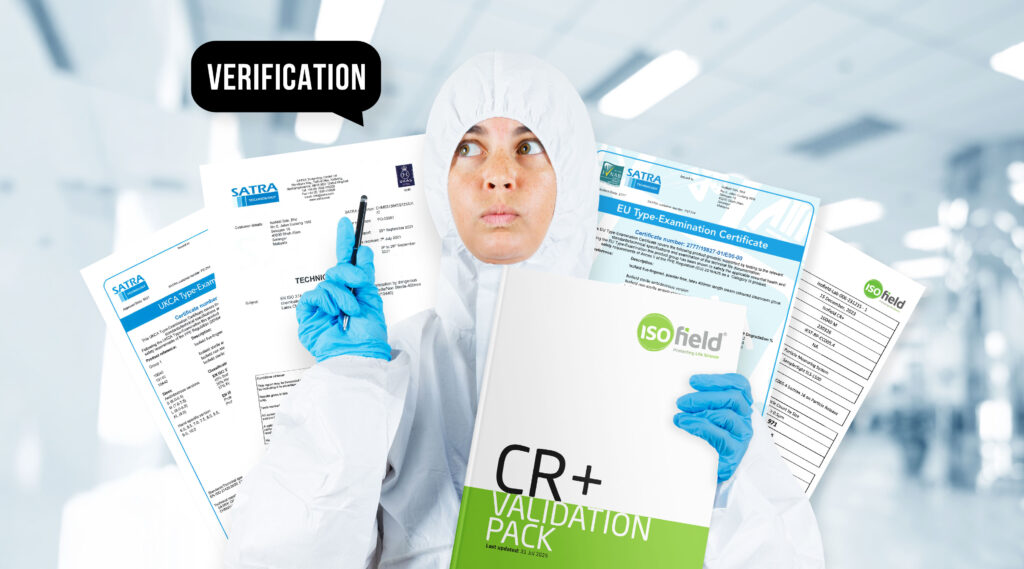
Audit readiness is the ability to produce complete, current and product-specific evidence under audit conditions.
For a cleanroom PPE supplier, audit readiness means that certification, validation, batch documentation, change control, supply chain controls and ethical sourcing evidence are sufficiently organised and current for a pharmaceutical customer to use them in supplier qualification and CCS maintenance.
EU GMP Annex 1 makes this especially important because it requires sterile manufacturers to control contamination through an integrated Contamination Control Strategy. That strategy should consider personnel, vendor approval, outsourced services, raw materials, components, sterilisation activities, monitoring, corrective and preventive actions, and continuous improvement. PPE suppliers sit directly inside this logic because gloves, garments, masks, eye coverings and footwear are critical contamination control considerations.
A supplier that can only provide a product data sheet is not audit-ready. A supplier that can produce applicable PPE Category III certificates, Declarations of Conformity, validation packs, sterility and cleanliness data, change control history, lot-level certificates, social compliance documentation and audit access is much closer to what pharmaceutical QA teams need.
1. Audit readiness begins with the difference between a claim and evidence
In pharmaceutical procurement, supplier risk is rarely caused by the absence of claims. Most suppliers claim quality, compliance and suitability. Supplier risk is caused by the gap between what is claimed and what can be evidenced.
For cleanroom PPE, the distinction is especially important because PPE is part of the contamination control system. A glove, garment, facemask or goggle may enter Grade A/B or associated Grade C/D operations many times per shift. It may contact critical surfaces, be worn during aseptic manipulations, influence operator behaviour, and become part of the observed state of control during inspection.
Therefore, audit readiness should be defined as follows:
A cleanroom PPE supplier is audit-ready when it can demonstrate, with product-specific and current documentation, that its products, manufacturing controls, sterilisation controls, quality system, change control process, and supply chain arrangements are suitable for the customer’s intended GMP use.
The definition deliberately includes the customer’s intended use. No supplier can declare a product suitable for every process. Suitability must be assessed against the site, process, cleanroom grade, contamination risk and operator exposure risk. This is the principle that underpins how we structure our supply chain and audit posture for QA-led customers.
2. Why Annex 1 changes the supplier qualification conversation
EU GMP Annex 1 is primarily concerned with sterile medicinal products, but its contamination control principles are increasingly used as a benchmark in facilities manufacturing non-sterile products where microbial, particulate or cross-contamination risk is significant.
Annex 1 places strong emphasis on Quality Risk Management and the Contamination Control Strategy. The CCS should not be a paper exercise. It should define how contamination risks are identified, controlled, monitored and improved across the facility and process.
From a PPE perspective, this has a direct consequence: supplier qualification cannot be limited to price, lead time or general compliance statements. The supplier’s documentation must support the site’s own contamination control rationale. This is reflected in how we shape evidence packs for both QA / RA Managers and Procurement Managers, because the questions each role needs answered are not identical.
For example, if a Grade B operator uses a sterile garment system for Grade A interventions, the site must be able to explain why the garment system is suitable. That explanation may require sterile presentation evidence, particle shedding data, particle retention data, packaging and folding controls, donning qualification, lot-level traceability and supplier change control. If the supplier cannot provide those records, the site is left with a documentation gap.
This is why audit readiness matters more than certification claims alone.
3. The five evidence domains of an audit-ready PPE supplier
| Evidence domain | What QA should expect | Why it matters under Annex 1 and GMP |
|---|---|---|
| Regulatory conformity | Declaration of Conformity, PPE category, Notified Body certificate, standards scope | Shows the product has followed the applicable PPE regulatory route. |
| Cleanroom and sterility validation | Sterility validation, SAL, endotoxin data, particle cleanliness, Helmke Drum, BFE/PFE, packaging evidence | Supports the site’s contamination control and gowning qualification rationale. |
| Batch and lot traceability | Certificate of Conformance, Certificate of Analysis, Certificate of Processing, lot-specific release data | Enables investigation, deviation assessment, complaint handling and recall traceability. |
| Change control | Documented notification process for material, process, sterilisation, packaging, site, certificate or specification changes | Keeps the customer’s CCS and validation file current after onboarding. |
| Supplier quality and supply chain | Quality system, outsourced service controls, social compliance, audit access, business continuity | Demonstrates that product quality is supported by controlled operations, not isolated certificates. |
4. Domain one: verifiable regulatory conformity
The first evidence domain is regulatory conformity.
For PPE that is placed on the EU market, Regulation (EU) 2016/425 is central. If a product is Category III PPE, the supplier should be able to provide an EU Declaration of Conformity and evidence of Notified Body involvement. Category III PPE is subject to EU type-examination and either supervised product checks at random intervals or production quality assurance.
For a QA audit file, the key evidence is not simply the CE mark. The file should include:
the Declaration of Conformity; the PPE category; the applicable standards; the product model and product codes covered; the Notified Body name and identification number; the conformity assessment route; the certificate reference and validity status; evidence that the certificate applies to the purchased product and not merely to a related family.
For Category III products, the four-digit Notified Body number after the CE mark should be checked against the NANDO database. This step is a useful control because it confirms that the supplier is not treating certification as a generic label. Where customers need the actual certificate retrieved against a product code, our Certificate Finder is built for that lookup.
5. Domain two: cleanroom and sterility validation evidence
Regulatory conformity is not the same as cleanroom suitability.
A product may be correctly certified as PPE but still be unsuitable for a Grade A/B cleanroom if it lacks sterile presentation, sheds particles, has unsuitable packaging, is difficult to don aseptically, or introduces behaviour risk.
An audit-ready supplier should be able to provide cleanroom and sterility evidence that corresponds to product type. This is where structured Validation Packs become important, because they collect the underlying test data, sterilisation evidence and packaging controls in one referenceable file rather than scattered attachments.
For gloves, this may include sterility validation, SAL 10^-6, endotoxin data, particle cleanliness, physical properties, chemical permeation and lot-specific certificates.
For garments, this may include sterility validation, low-linting evidence, Helmke Drum or equivalent particle shedding data, Type 5/6 certification where applicable, packaging integrity, folding method, donning instructions and shelf-life data.
For facemasks , this may include bacterial filtration efficiency, particle filtration efficiency, differential pressure, sterility evidence, microbial cleanliness and packaging controls.
For goggles, this may include eye protection standard conformity, sterilisation or autoclave validation, maximum cycle claims, inspection criteria, lens integrity, venting design and compatibility with hood and facemask systems.
From an Annex 1 perspective, the central question is whether the evidence supports the role of the PPE in preventing contamination. Category III is part of the argument where operator protection is also a high-consequence requirement, but Annex 1 suitability requires cleanroom-specific evidence.
6. Domain three: lot-level traceability and release documentation
Lot-level traceability is often where supplier readiness is tested in practice.
During routine use, QA may need lot documentation for release, deviation assessment, environmental monitoring investigations, media fill observations, sterility concerns, operator complaints or product quality reviews. A supplier that can only provide generic technical data may not support these investigations adequately.
Audit-ready documentation should include, where applicable:
lot number and product code traceability; Certificate of Conformance; Certificate of Analysis; Certificate of Processing or sterilisation certificate; irradiation or sterilisation batch reference; endotoxin results; bioburden or sterility-related release data; packaging and expiry date controls; complaint and deviation escalation pathways.
This is one reason validation packs and certificate access tools are important. They reduce the time between a QA question and an evidenced answer.
7. Domain four: change control and CCS maintenance
Change control is the most important evidence domain after onboarding.
At the point of supplier approval, a site may hold current certificates and validation data. But the CCS is a living control strategy. If the supplier changes a raw material, manufacturing location, packaging configuration, sterilisation provider, sterilisation dose, garment construction, glove formulation, certificate scope or test method, the customer’s original qualification assessment may no longer be fully accurate.
An audit-ready PPE supplier should therefore have a documented change notification process. The process should define:
what constitutes a notifiable change; how customers are notified; how much notice is normally provided; whether change notifications include affected product codes and lots; what supporting evidence is supplied; how urgent or forced changes are handled; how historical change notifications can be accessed.
For the pharmaceutical customer, Change Control Notifications should trigger an impact assessment. The site should determine whether the change affects the CCS, gowning qualification, process risk assessment, SOPs, training, validation file or supplier qualification status.
This is where PPE supplier audit readiness and Annex 1 become tightly connected. A supplier without change control forces the customer to discover changes late. A supplier with transparent change control helps the customer maintain the CCS proactively.
8. Domain five: supplier quality, outsourced services and supply chain control
PPE quality is not generated only at final inspection, rather it is generated by the supply chain.
For cleanroom PPE, relevant supply chain activities may include raw material sourcing, compounding, dipping, cleanroom processing, sterilisation, packaging, storage and distribution. Each step can influence contamination risk, wearer protection or availability.
An audit-ready supplier should be able to explain which processes are performed in-house, which are outsourced, how outsourced service providers are qualified, and how quality information is transferred between parties.
This is directly aligned with Annex 1 thinking. Annex 1 expects contamination control to consider vendor approval and outsourced activities. Therefore, sterilisation providers, cleanroom processors, packaging sites and critical logistics partners can become part of the customer’s supplier risk assessment.
Ethical sourcing and social compliance also sit within modern supplier qualification. Sedex, SMETA and Ecovadis are relevant because they provide structured visibility into labour standards, health and safety, environmental performance and business ethics. They are not GMP certificates, and they should not be described as such. Their value is that they contribute to supplier risk understanding and supply chain assurance.
9. Open-book audit behaviour
The final test of audit readiness is practical: can the supplier be audited?
A supplier may have strong documentation but resist end-user audit access. That should be treated as a risk signal. For critical cleanroom PPE, an end-user audit may need to examine manufacturing controls, cleanroom processing, batch documentation, training, material controls, sterilisation interfaces, change control, complaint handling and CAPA.
Audit-ready behaviour includes:
willingness to host customer audits; clear audit scope definition; access to quality records appropriate to the scope; availability of subject matter experts during the audit; documented CAPA responses; transparency around outsourced activities; timely follow-up on audit observations.
This is not about demanding unlimited access to proprietary information. It is about ensuring that the customer can verify the controls on which its own GMP system relies.
10. Academic audit model: claim, evidence, verification, lifecycle
| Layer | Question | Example for cleanroom PPE |
|---|---|---|
| Claim | What does the supplier say? | “This sterile glove is suitable for GMP Grade A/B.” |
| Evidence | What document supports the claim? | Sterility validation, endotoxin data, Declaration of Conformity, particle data. |
| Verification | How does QA confirm the evidence is valid? | Check product code coverage, Notified Body number, lot number, test method and certificate status. |
| Lifecycle | How is the evidence kept current? | Change notifications, periodic supplier review, audit follow-up, validation updates. |
11. Red flags during PPE supplier qualification
A supplier may not be audit ready if it shows any of the following behaviours:
uses “CE marked” as a substitute for supplying the Declaration of Conformity; cannot identify the Notified Body associated with a Category III claim; provides certificates that do not match the product code being purchased; treats sterility validation as equivalent to a simple irradiation certificate; cannot provide lot-level documentation; has no documented change notification process; cannot explain which processes are outsourced; refuses reasonable end-user audit access; cannot provide evidence for particle, fibre, endotoxin or packaging claims; cannot explain how product changes are assessed for customer impact.
These are not merely procurement concerns. They can become GMP concerns if they affect the site’s ability to justify PPE as a contamination control.
12. Technical conclusion
An audit-ready cleanroom PPE supplier is not defined by a single certificate. It is defined by the ability to connect product claims to documented evidence, verify that evidence, maintain it through change control, and support the customer’s own GMP and CCS obligations.
For QA, RA and aseptic engineering teams, the supplier qualification question should therefore be reframed.
Do not ask only: “Is this product compliant?”
Ask: “Can this supplier help us defend the product’s role in our contamination control strategy throughout its lifecycle?”
When PPE is used in sterile manufacture, and especially where Category III claims intersect with Annex 1 gowning requirements, that lifecycle evidence is the difference between a supplier who can claim compliance and a supplier who is genuinely audit ready.
FAQs
What does audit ready mean for a PPE supplier?
Audit ready means the supplier can provide complete, current and product-specific evidence under audit conditions. For cleanroom PPE, this includes regulatory conformity, validation documentation, lot-level evidence, change control records, supply chain information and audit access.
What documentation should a cleanroom PPE supplier provide?
A supplier should provide Declarations of Conformity, Notified Body certificates where applicable, validation packs, sterility validation, endotoxin data, particle or Helmke Drum data, filtration performance data, lot-specific certificates, packaging and shelf-life evidence, and change notifications.
What is SEDEX and why does it matter for pharmaceutical procurement?
A Change Control Notification is a supplier communication that informs customers of changes that may affect product performance, validated status, certification, packaging, manufacturing process, sterilisation, materials or supply chain. It allows the customer to assess impact on its CCS and qualification file.
What is a Change Control Notification in the context of cleanroom PPE?
Sedex provides tools and data for responsible sourcing. SMETA audits assess labour standards, health and safety, environmental performance and business ethics. They are not GMP certificates, but they can support supplier risk evaluation and supply chain assurance.
How do I qualify a new PPE supplier under EU GMP expectations?
Use a documented supplier qualification process that reviews intended use, PPE regulatory conformity, cleanroom suitability, validation data, lot-level traceability, change control, outsourced services, ethical supply chain evidence and audit access. The qualification should be linked to the site’s contamination control strategy.
What should I look for when auditing a cleanroom PPE manufacturer?
Look for evidence that claims are supported by controlled processes: material controls, cleanroom processing, sterilisation interfaces, batch records, product release, complaint handling, CAPA, change control, personnel training, outsourced service management and willingness to provide product-specific documentation.